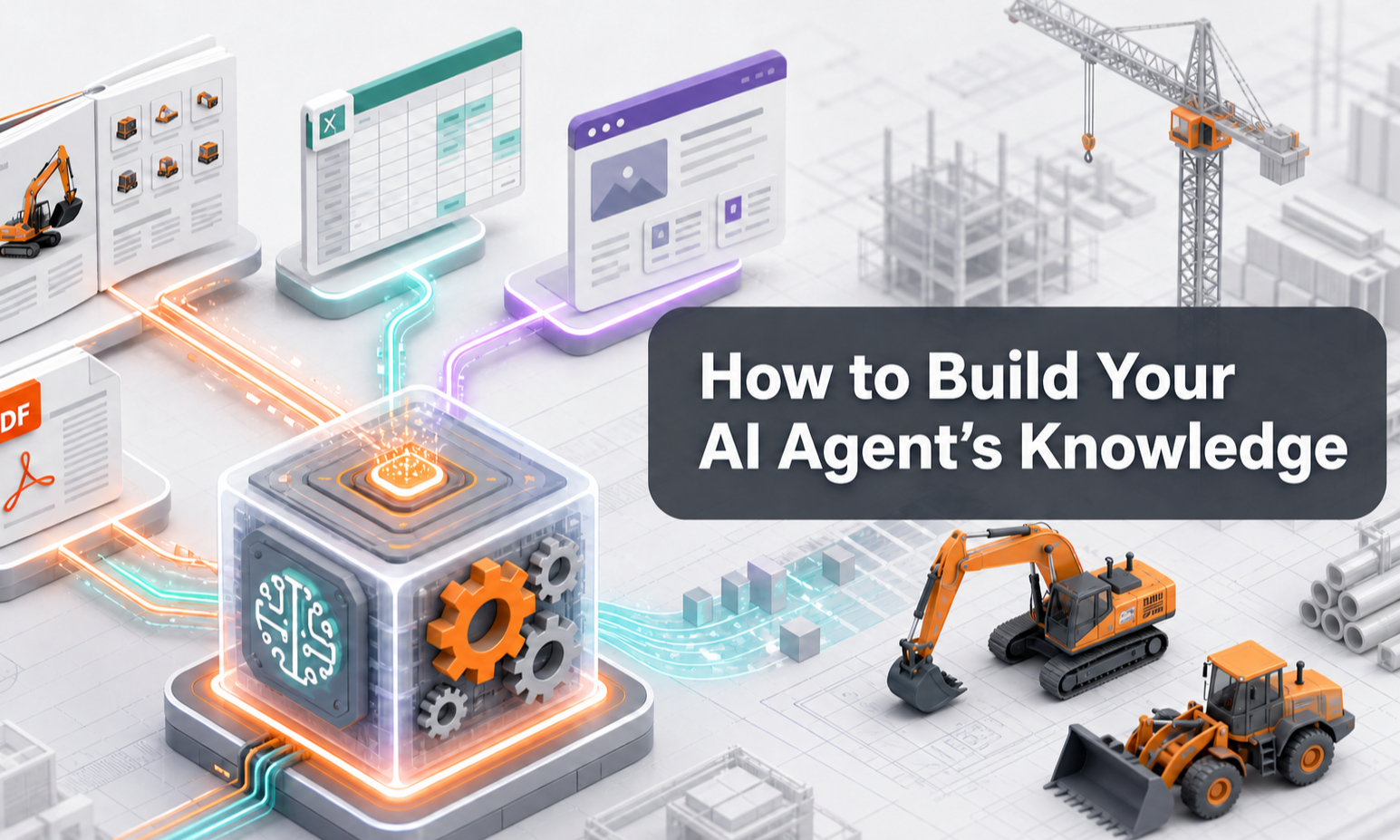
Your AI Agent becomes more useful when it understands your business, your products and the way your team handles customer enquiries.
You do not need to prepare everything before getting started. Most businesses already have useful information across websites, catalogues, PDFs, spreadsheets, FAQs, policies, technical documents and internal processes.
Start with the information you already have, then improve it over time.
1. How the Knowledge Base Works
Antbuildz organises your business knowledge into different areas so your AI Agent can use the right information for the right situation.
1.1 Introduction Use Introduction to explain who your company is and what your business does.
Useful information may include:
- Company profile
- Main products and services
- Industries served
- Customer types
- Countries or regions served
- Business locations
- Important contact information
- Company capabilities
This gives your AI Agent the basic context it needs to represent your business correctly.
1.2 SOP Use SOP to explain how your business wants different customer enquiries to be handled.
This may include:
- Sales enquiry process
- Qualification questions
- Quotation workflow
- Lead capture requirements
- Product recommendation process
- Escalation rules
- Human handover
- Technical support workflow
- Actions the Agent should or should not take
Product Knowledge tells the Agent what you sell.
SOP tells the Agent what to do next.
1.3 FAQs Use FAQs for common customer questions with clear and repeatable answers.
Examples include:
- Do you deliver?
- How can I request a quotation?
- What payment methods do you accept?
- What warranty is provided?
- Do you provide installation?
- What is the lead time?
- Who should I contact for support?
FAQs are especially useful for questions your team answers repeatedly.
1.4 Terms & Agreements Use Terms & Agreements for approved commercial terms, policies and customer-facing conditions.
This may include:
- Payment terms
- Delivery terms
- Warranty conditions
- Rental terms
- Cancellation rules
- Return policies
- Service conditions
- Other agreements
Your AI Agent can use this information to explain approved terms, but it should not invent exceptions or make commitments outside your approved information.
1.5 Website Your existing website may already contain useful business information.
Relevant pages may include:
- About Us
- Product pages
- Service pages
- Industry pages
- FAQs
- Resource articles
- Policies
Make sure the pages you use are current and accurate.
Outdated or conflicting website information can reduce answer quality.
1.6 Product Knowledge Use Product Knowledge for detailed information about the products your customers may want to understand, compare or select.
This may include:
- Product name
- Brand
- Model
- Category
- SKU
- Serial number
- Product description
- Specifications
- Datasheets
- Catalogues
- Manuals
- Technical tables
- Charts
- Diagrams
- Applications
- Compatibility
- Limitations
- Related products
For complex products, this area is especially important because customers often depend on technical information when making a decision.
2. How the Agent Uses Different Knowledge Together
Your AI Agent may use several knowledge areas during the same conversation.
For example, a customer may ask:
“Which product is suitable for my application, and can you deliver next week?”
The Agent may use:
- Product Knowledge to identify suitable products
- SOP to determine what questions to ask next
- FAQs to answer common delivery questions
- Terms & Agreements for approved commercial conditions
- Introduction to understand your service coverage
The information does not need to be stored in one large document.
Different knowledge areas can work together to support the conversation.
3. Start With the Essentials
You do not need to complete every knowledge section before testing your AI Agent.
Start with:
- Basic company information
- Your most important products
- Common customer questions
- Important SOPs
- Key business rules
Then test the Agent with real customer questions and improve the knowledge where gaps appear.
4. Key Takeaway
Your Knowledge Base does not need to be perfect before you begin.
Start with useful information, test early and improve your AI Agent over time.